

Electric Solutions
for Cleaner Ports
Leading Ports and
Waterfront Infrastructure
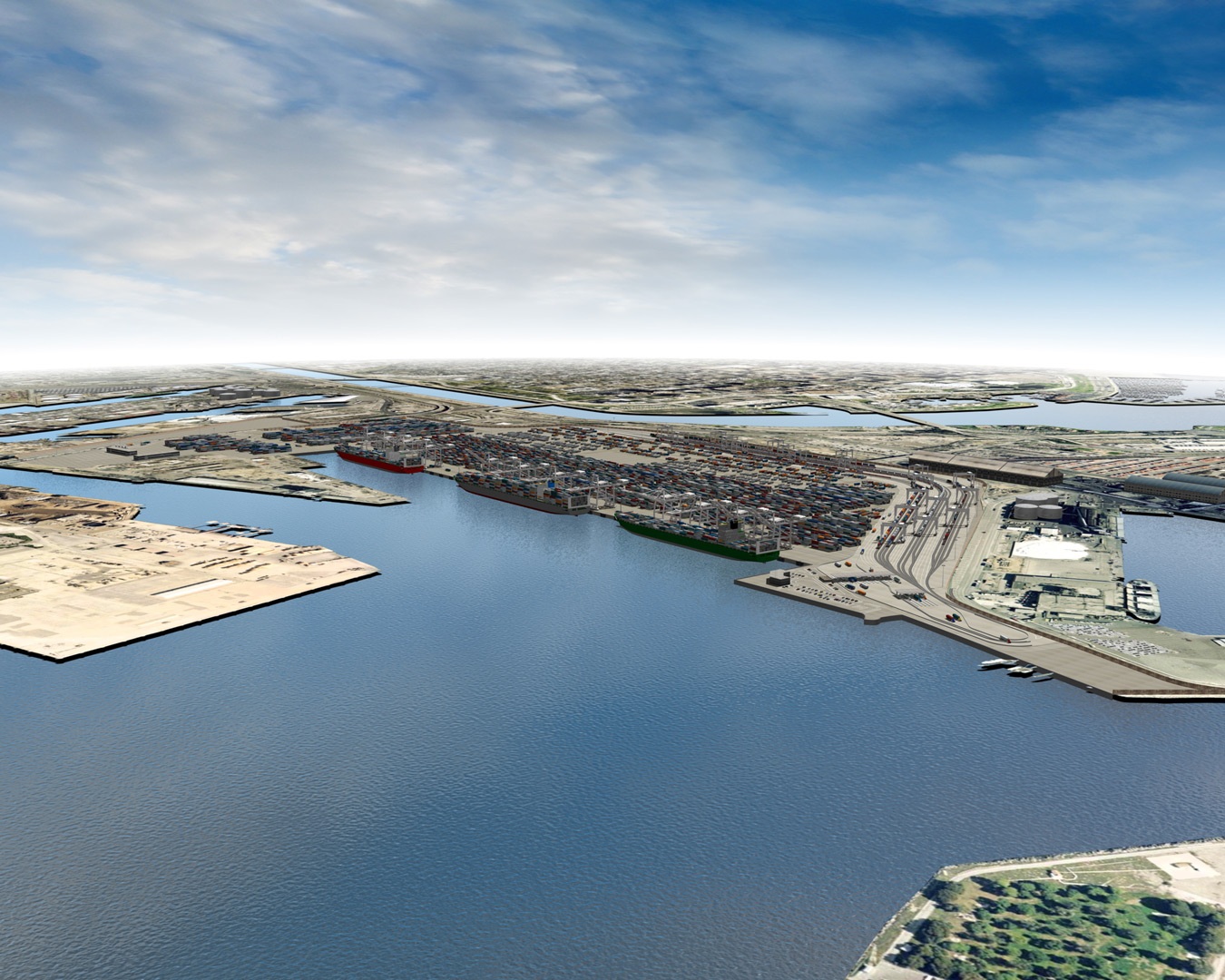
For over three decades, P2S has been at the forefront of port and waterfront infrastructure on the West Coast, providing electrification strategies for a variety of equipment, including battery electric yard equipment, cranes, and vessels, as well as shore power for ocean-going vessels. Our projects have ranged from marine terminal design to zero-emissions master planning, and from medium-voltage infrastructure design to ferry electrification. Our work extends to designing the electrical infrastructure supporting the largest automated, zero-emission terminal in North America: Middle Harbor at the Port of Long Beach.
Our P2S teams are highly involved in designing systems for ports and harbors, but our expertise does not end there. In a practice that began with our founding, we play a substantial role behind the scenes, helping shape the technical framework the industry relies on. P2S co-founder Kevin Peterson was instrumental in guiding the development of international standards for shore power, which allows ships to plug into electricity while docked at harbor. Kevin continues to serve as the working group chair for IEEE 80005, advancing standards to ensure that shore power systems are safe and compatible around the world.
Ferry Electrification
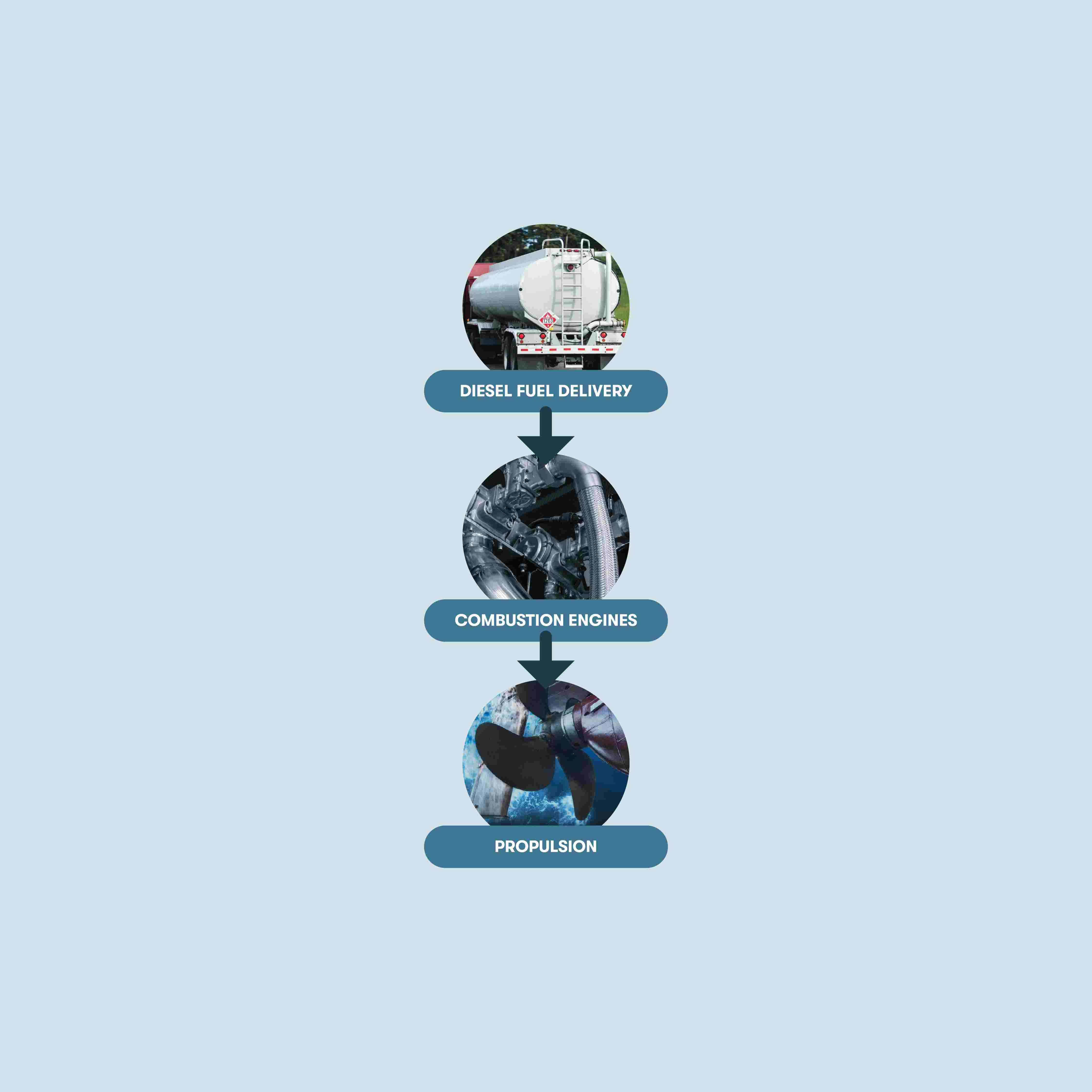
100+ Years of Conventional Diesel Power
For over a century, conventional vessels have utilized combustion engines powered by diesel delivered to the boat by a fuel truck or barge. As we evolve toward electric power, numerous new considerations must come into play.
For ferries, like electric cars, the engine is replaced with a rechargeable battery. However, with port electrification, we must design for a much longer lifespan — 20-30 years, and sometimes up to 50 or more.
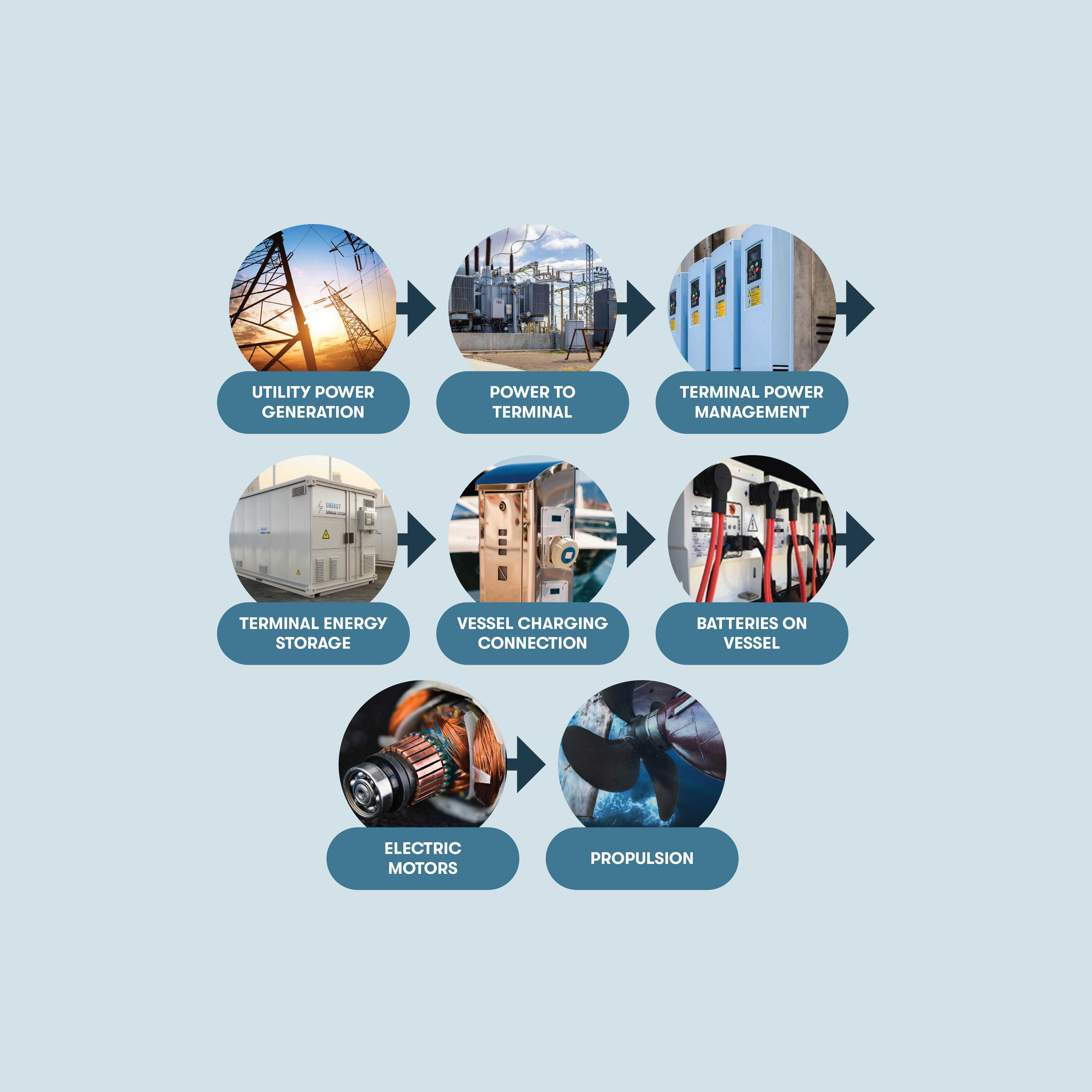
What's Different about an E-Powered Vessel?
An electrical vessel, as opposed to a conventional one, requires several more intermediary steps, including a final charging connection for the vessel to plug into power. In most cases, to charge a vessel, a significant amount of power is needed from the grid. The P2S team must coordinate with the utility for a utility substation, or at a minimum, a client-owned substation and transformer, followed by a power management system. Depending on the scale of power needed, this may look like switchboards, controls, or panel boards.
Additional considerations, determined on a project-by-project basis, may include terminal energy storage. P2S has delivered projects with enormous impact on the utility grid in densely populated cities, a challenge that necessitates early coordination with the utility. As vessels are not being charged continuously, the grid will see sharp, intermittent spikes during the short charging windows throughout the day, which can strain utility infrastructure. To achieve consistent power use, P2S typically integrates a battery system, which can offset the spikes and be charged during off-peak periods.
Solutions like these require the foresight to understand what kind of utility capacity might be needed, what is available, and what upgrades are feasible in each unique situation.
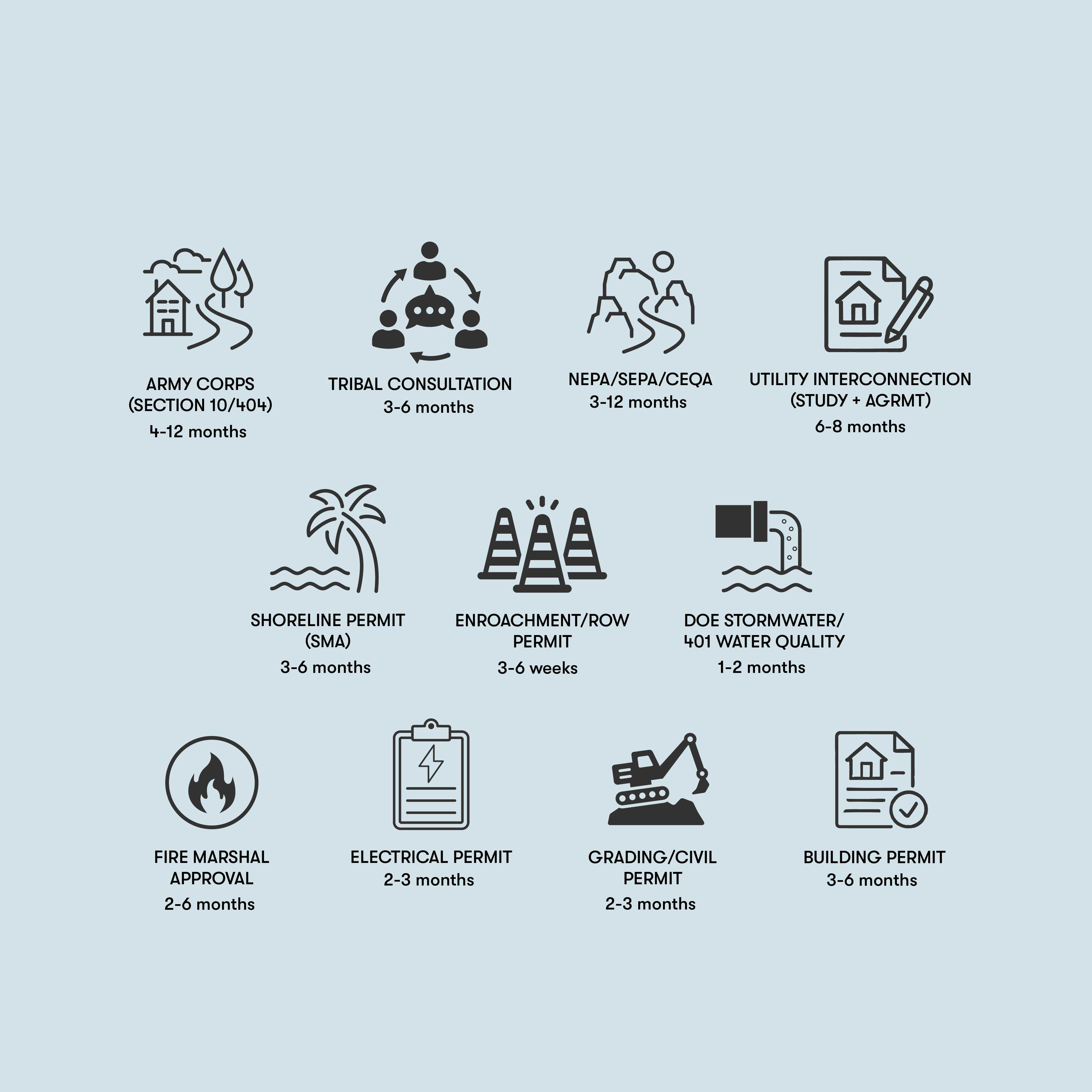
Electrical Power Permitting
Shore Power
P2S provides end‑to‑end planning, design, and implementation support for shore‑to‑ship power systems, helping ports, NAVFAC, and terminal operators reduce emissions, meet regulatory requirements, and future‑proof their infrastructure. With more than three decades of ports and harbors experience, P2S delivers shore power solutions for container, cruise, ferry, and mixed‑use terminals—ranging from early feasibility and load analysis to final design and construction administration. Our team combines deep technical expertise, real‑world constructability insight, and industry leadership in shore power standards to deliver systems that are reliable, compliant, and adaptable to evolving vessel technologies and operational demands.
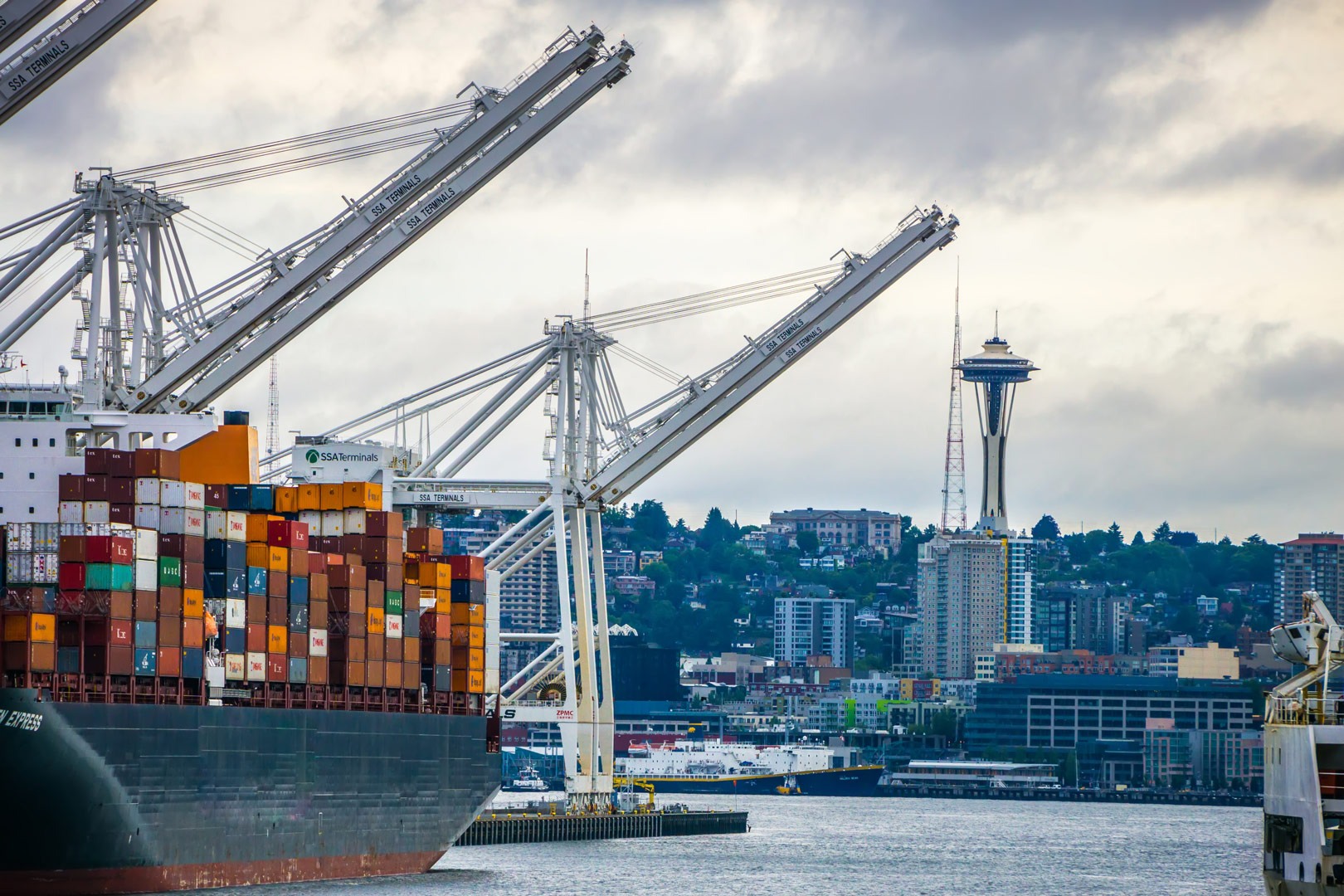
Port of Seattle, Terminal 18 Shore Power
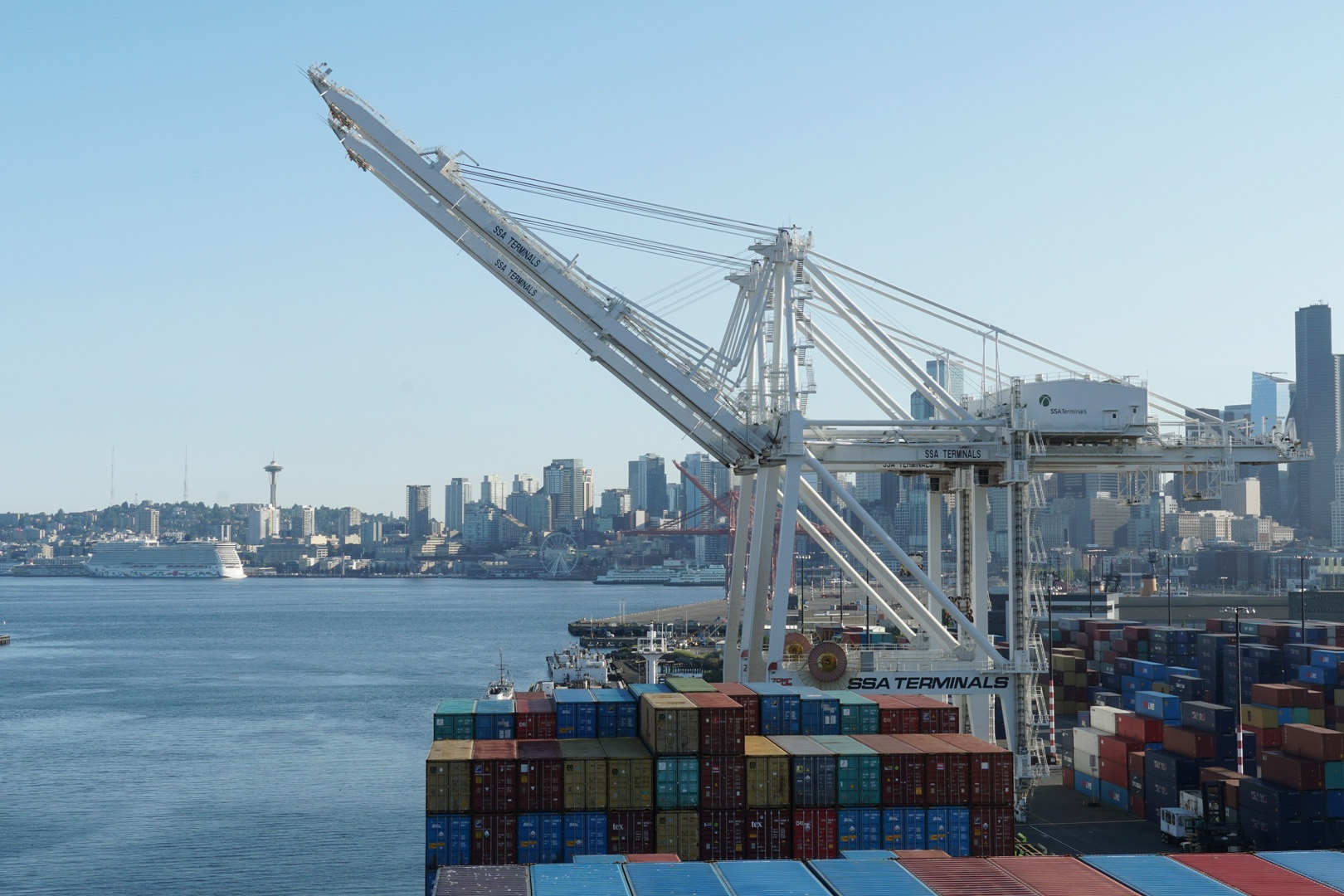
P2S is providing electrical engineering design services for the installation of a shore power system to electrify two berths at the terminal.
Among our services, we provided electrical engineering services to design a prefabricated substation consisting of 13.8kV incoming metal-clad switchgear and 6.6kV metal-clad and metal-enclosed switchgear sections serving the shore power outlets at the berths, along with a 7.5MVA 13.8kV - 6.6kV transformer. The system is designed to meet the requirements of IEEE 80005, Washington Administrative Code and National Electrical Code. A detailed sequence of operation and wiring diagrams were provided in coordination with the port to ensure the system operates as required by the standards and port requirements. Special consideration was given to the SCADA and HMI system to ensure that port staff can effectively operate the new shore power system. P2S provided drawings, specifications, and detailed cost estimates to help the port obtain grant funding required to install the shore power system.
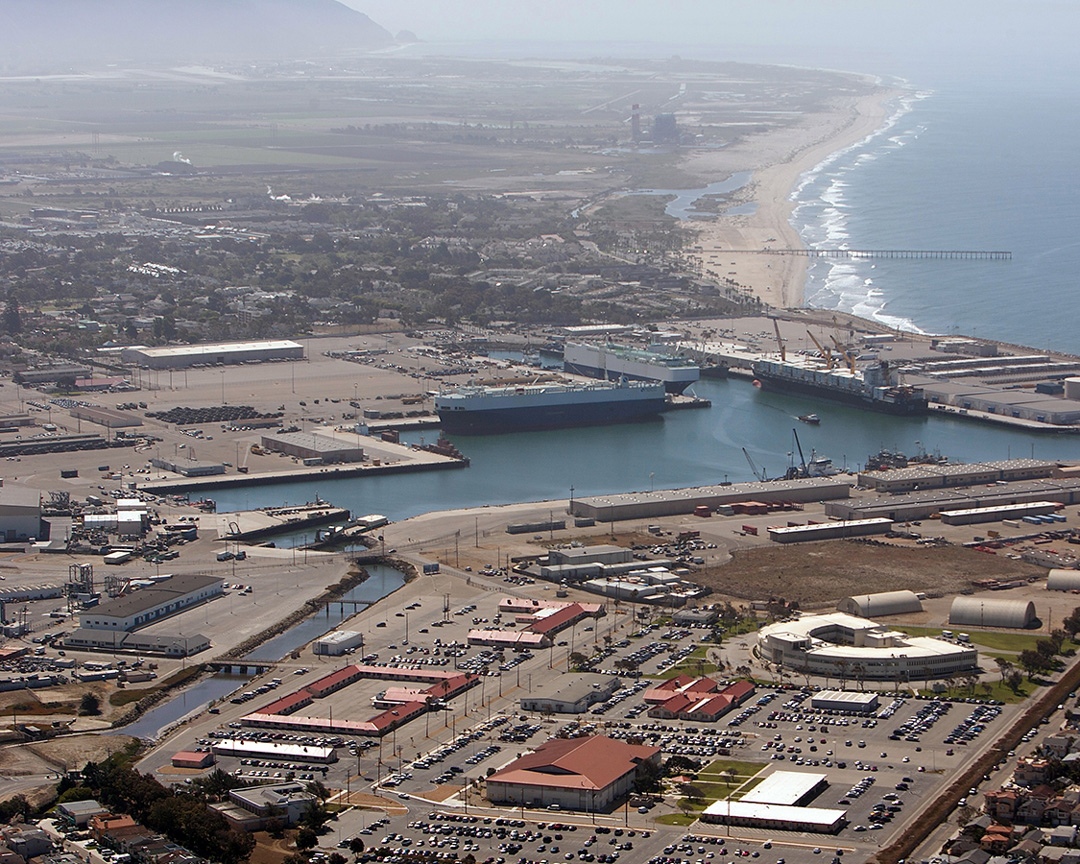
Port of Hueneme, Shore Power Infrastructure Project
P2S served as prime consultant for the retrofit of shore-power outlets to feed three berths at the Port of Hueneme’s operating container terminal and was responsible for the engineering, design, and construction administration for this two-year project.
The project included new 16.9kV service switchgear, 2,000 feet of duct banks, two shore power substations, and six shore power outlet boxes. Our task was to design a shore power solution providing 3 MVA, 6.6 kV connection points for ships to “plug-in” while at berth. To install each of these 12’ x 5’ x 3’D vaults, which had to be on the water edge of the wharf, we had to cut into the existing wharf structure. Construction occurred in an operating terminal, so work sequences had to be carefully planned and delineated in the construction documents.
This project was designed as a “fast-track” — it was critical that the Work of Improvement be completed in a timely manner. The District had a contract with the South Coast Air Quality Management District by which it would be reimbursed from Proposition 1B bond funds 50% of the costs incurred if the project was completed and operational before 2014. Procurement specifications were provided to the Port to purchase the switchgear six weeks into the design. Construction documents for the plan check submittal were completed in four months. P2S also coordinated the new service and Rule 21 agreement with Southern California Edison on this compressed schedule.
US Navy, Naval Base San Diego, P-440 Pier 8 Replacement
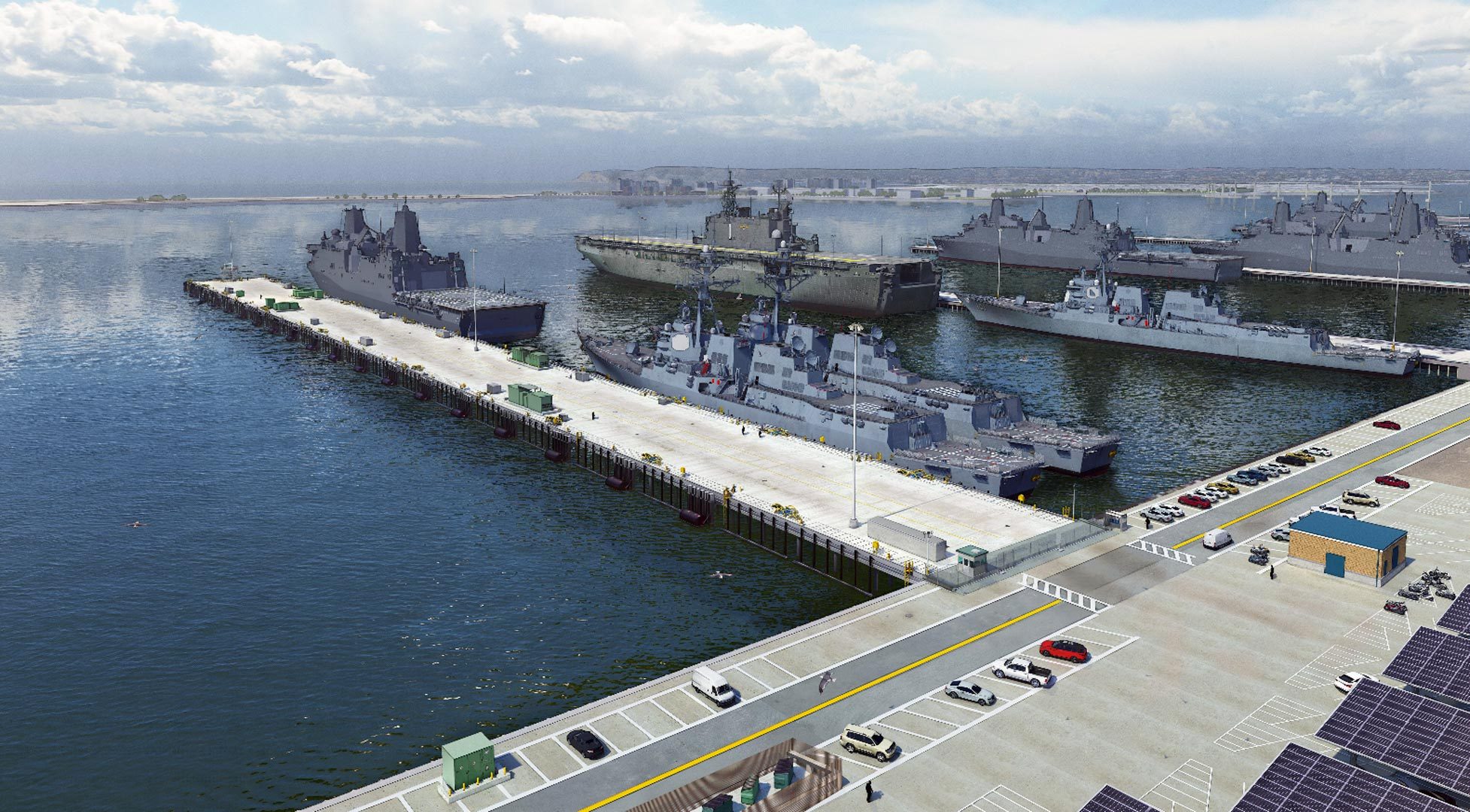
P2S worked with the NAVFAC Southwest in support of the $93 million Pier 8 Replacement at Naval Base San Diego. Specifically, the Navy replaced the existing pier with a new single-deck 117 ft. by 1,600 ft. (187,200 sf) General Purpose Berthing Pier, which provides capacity for four large ship berths.
P2S is the electrical engineer of record for the project and was responsible for designing the new site electrical and communications utility system for the Pier 8 facility, which consists of all power, lighting, security, telecommunications, grounding, and fiber-optic cabling.
The backland electrical design included 3,200 feet of new 15kV ductbank installed through the operating Navy Base and modifications to the 15kV Vesta and J switching stations that distribute power at the facility. The Pier 8 medium-voltage infrastructure was designed in compliance with UFC 4-150-02, Dockside Utilities for Ship Service. It consists of two 8/10 MVA 12.47kV-4.16kV skid-mounted shore power substations with 12.47kV voltage regulators, eight 4MVA 12.47kV-480/277V skid-mounted shore power substations, as well as two 2.5MVA 12.47kV-480/277V industrial substations arranged in a multi-loop configuration and connected with over 7,000 feet of new 15kV feeders through SF6 gas-insulated switches that provide redundancy and resiliency for maintenance and operation of the Pier. The medium-voltage infrastructure is networked via fiber-optic cable to the Navy Base SCADA UCS. This allows monitoring of switchgear and breaker status, remote control of substation switchgear breakers, and metering and load recording of individual circuits.
The Pier 8 lighting system is designed in accordance with UFC 3-530-01, Interior and Exterior Lighting Systems and Controls. The pier is illuminated with a combination of 100’ high mast poles and 16’ area poles with LED flood luminaires to help provide security and safety for waterfront operations. The telecommunications infrastructure is distributed via six signal system mounds, integrating the telephone, data, fire alarm, cable TV, and LAN networks for the pier.
Design and construction for the project were both completed on time and on budget, with construction wrapping up in 2021.
Marine Terminal
Design and Electrification
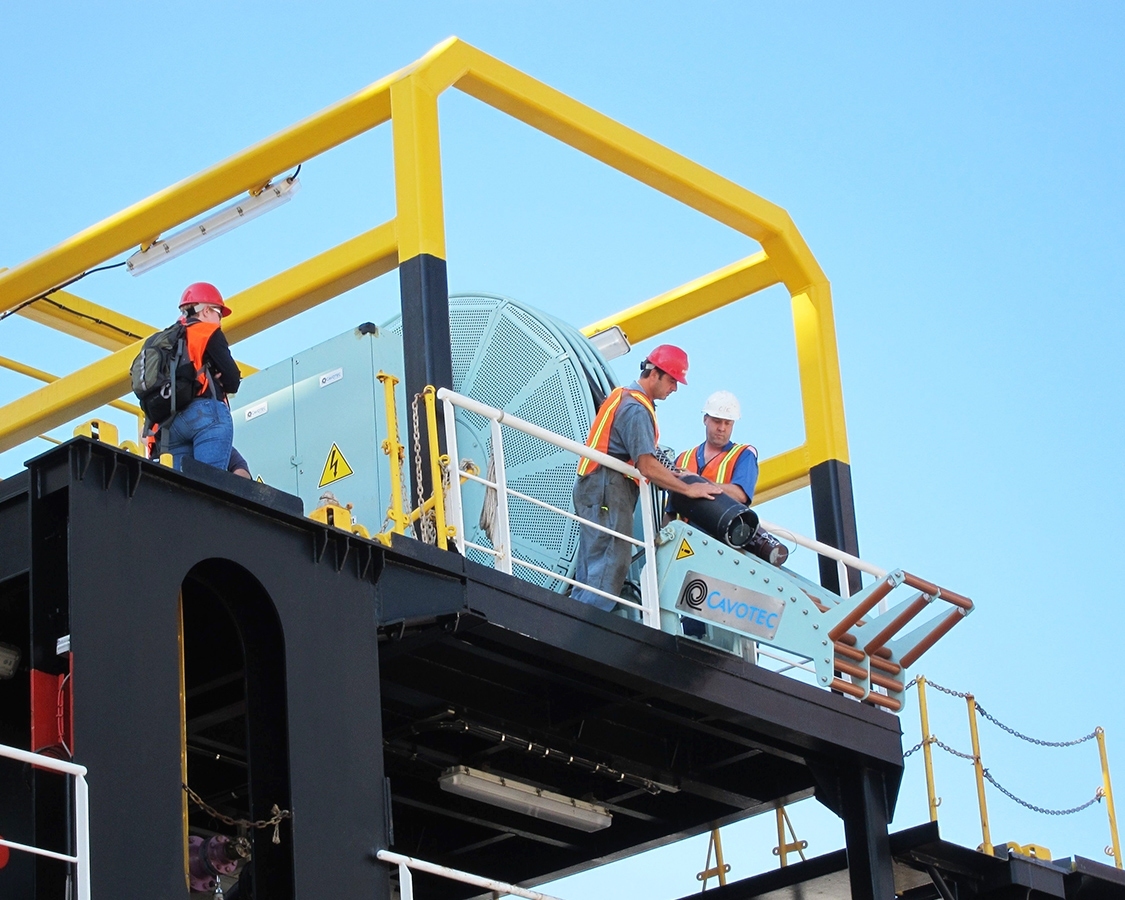
P2S provides full‑service electrical and infrastructure design for marine terminals, delivering integrated solutions that support safe, efficient, and low‑emission port operations. Our experience spans all aspects of marine terminal design, including primary and secondary power distribution, utility coordination and substations, shore power for vessels and boats, power for electrified container and bulk‑handling cranes, rail‑mounted and rubber‑tired equipment, and charging infrastructure for battery-electric yard equipment. P2S also designs high‑mast and terminal lighting systems, yard and wharf power, administration and maintenance facilities, and supporting infrastructure required for modern, high‑throughput terminals.
From early planning, load forecasting, and electrification feasibility through detailed design and construction administration, P2S delivers practical, constructible solutions tailored to active marine environments. Our team understands the operational demands of container, cruise, ferry, and mixed‑use terminals and designs infrastructure that supports current needs while remaining adaptable to evolving vessel technologies, automation, and long‑term decarbonization goals.
The projects below highlight P2S’s experience delivering complex marine terminal and electrification projects at major ports throughout the West Coast.
Port of Long Beach, Middle Harbor Redevelopment
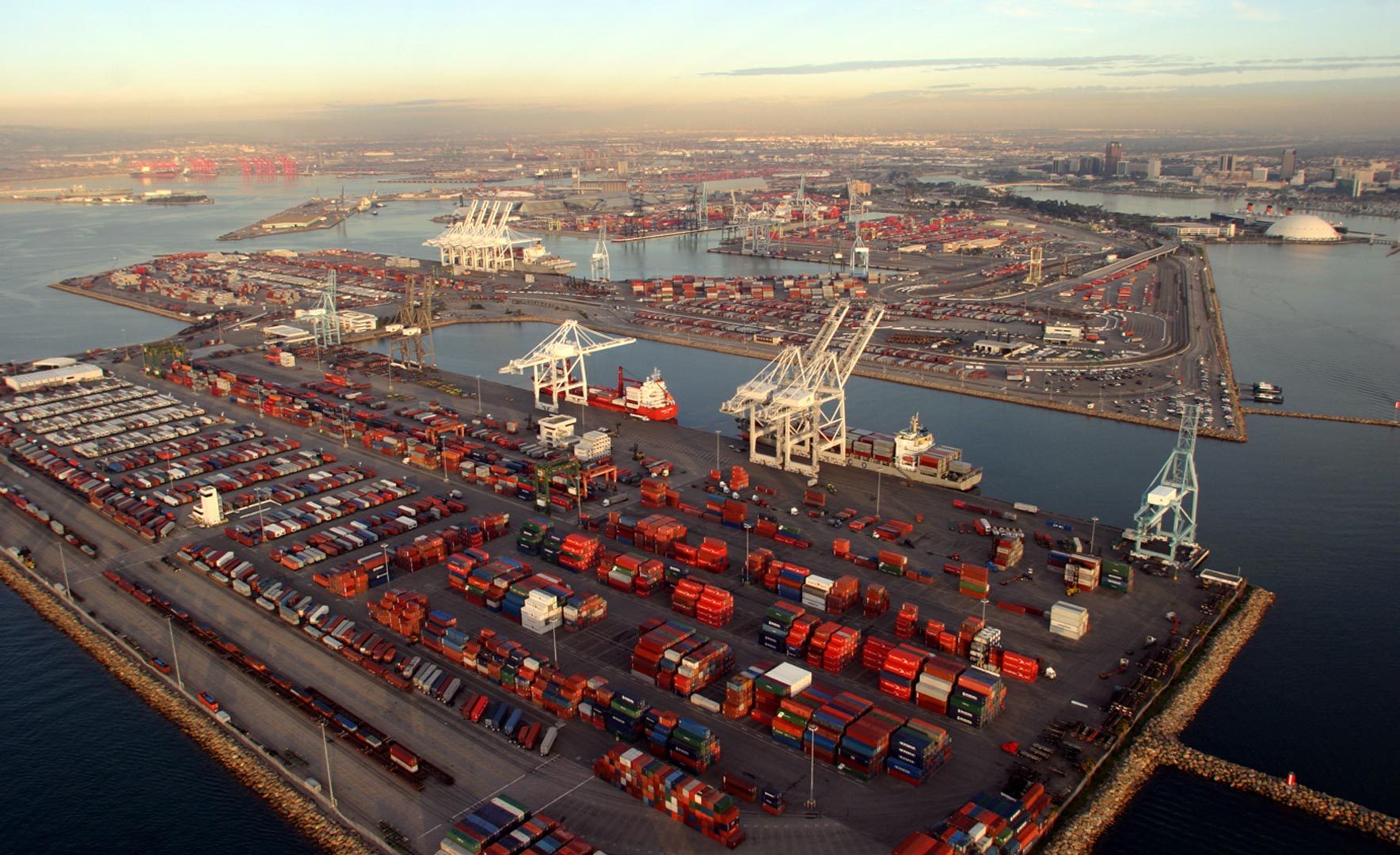
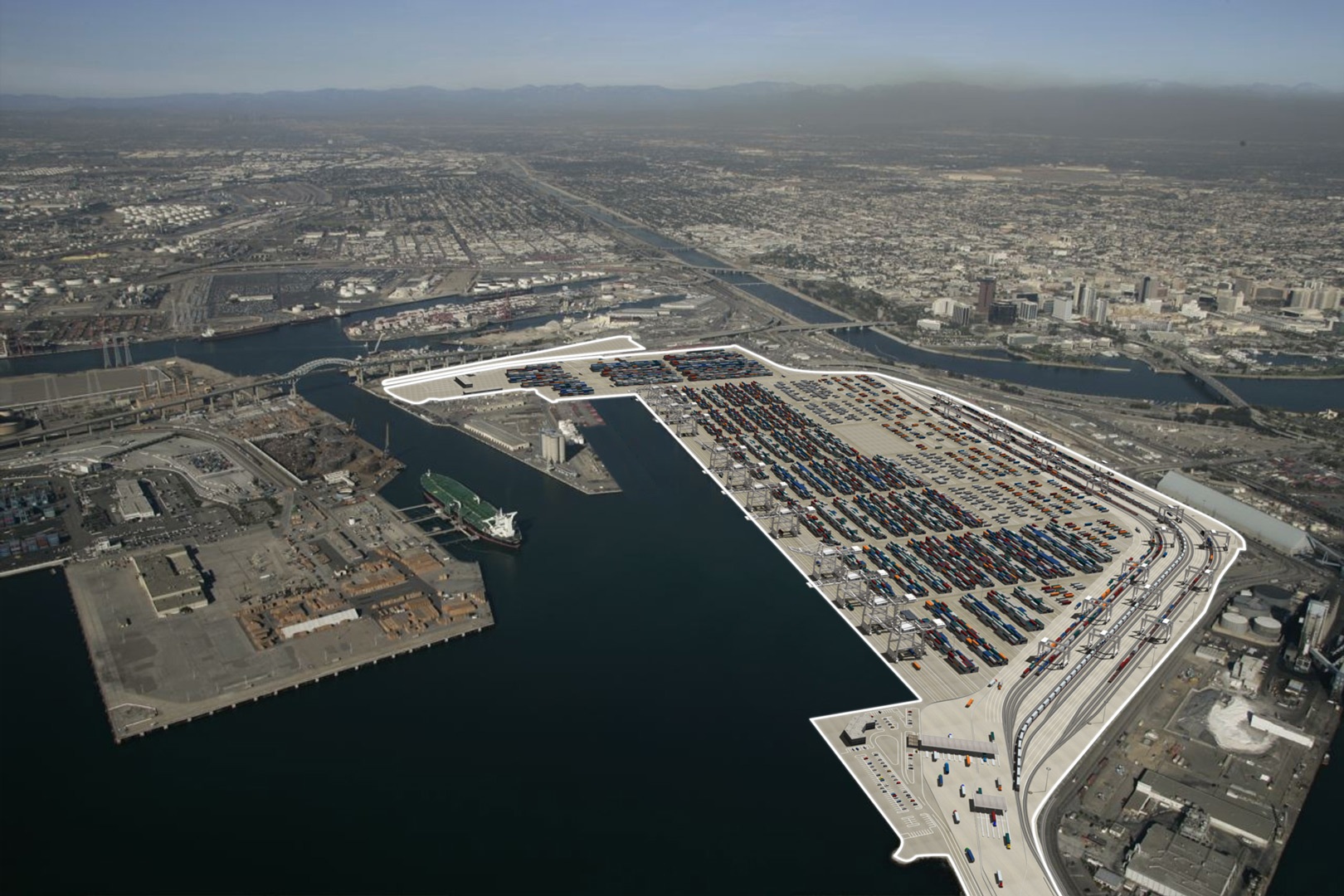
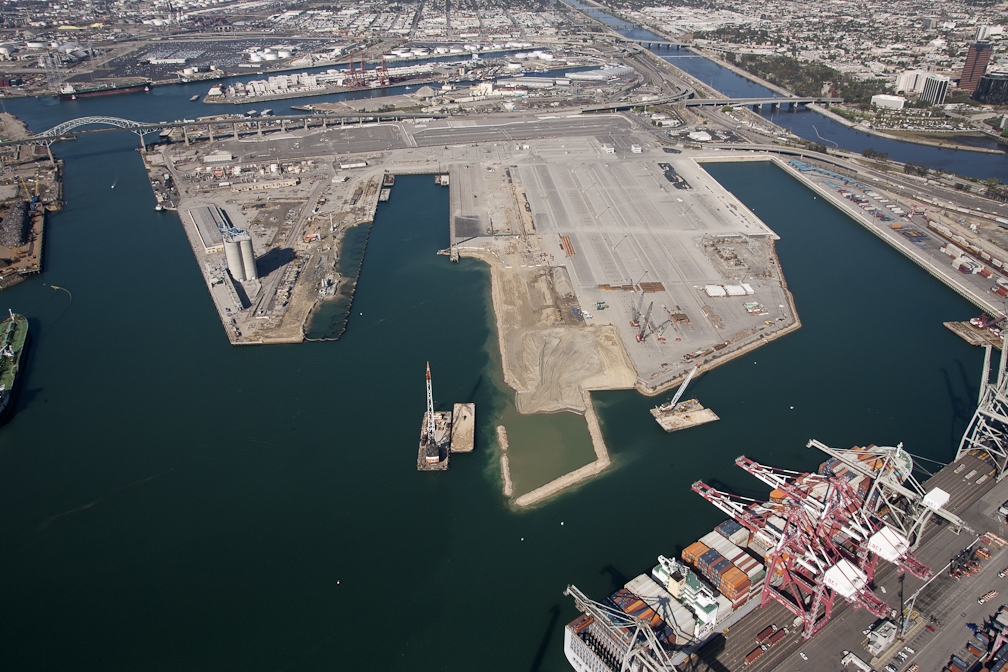
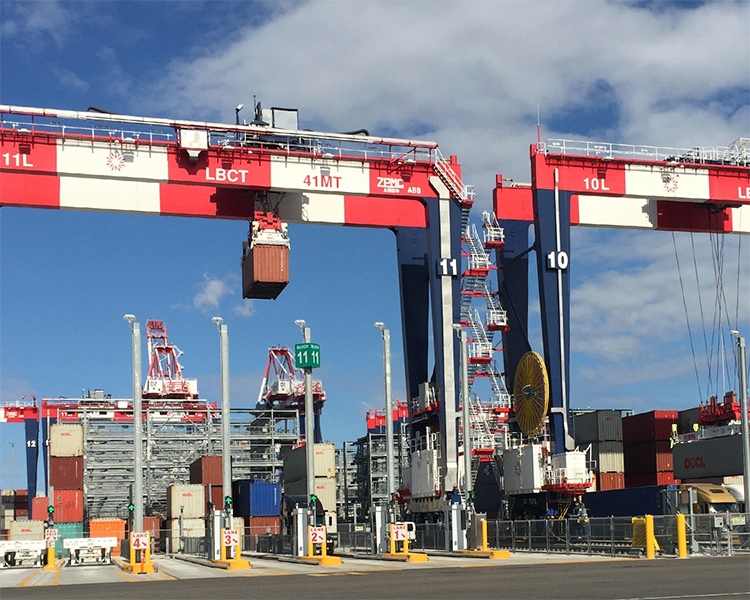
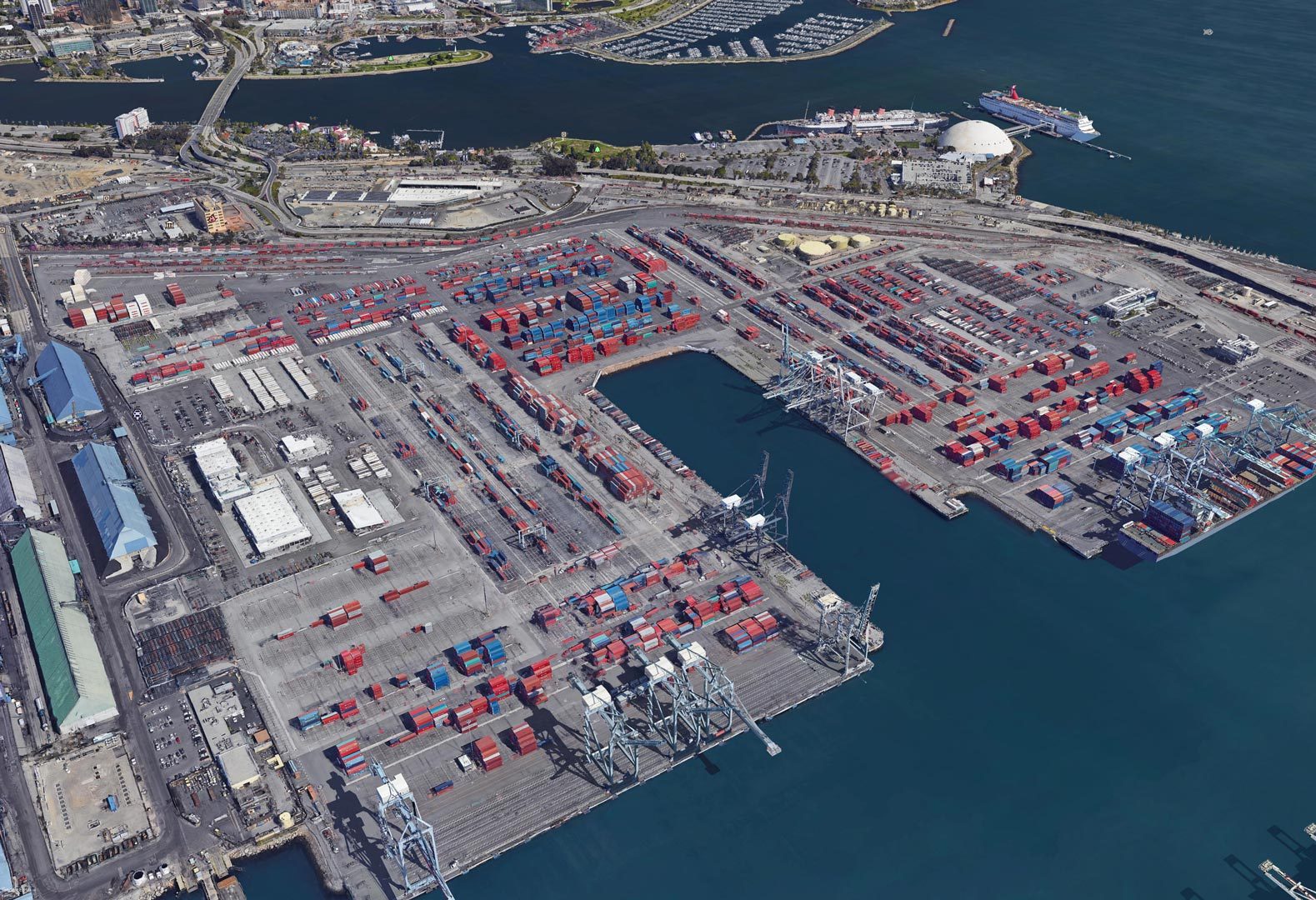
P2S designed a new and improved electrical infrastructure at the Port of Long Beach’s Middle Harbor, including shore power and lighting improvements. Budgeted at $1.4 billion, the project encompasses 4280 LF of wharf plus over 300 acres of backland improvements. The Middle Harbor Terminal (MHT) is the first fully automated and electrified container terminal in the country. The power infrastructure has the capacity to fully support not only typical terminal needs (medium voltage quay cranes, site lighting, and building distribution), but also “greener” port technologies such as shore-to-ship power, LED high-mast lighting, and electrified rail-mounted gantry cranes in the container yard.
Our solutions included a 66-12kV substation to serve the terminal, crane power, shore power, area lighting, and communications; 20,000 feet of new underground duct banks for distribution 7.5 MVA, 6.6 kV connection points are planned every 250 ft. along the wharf for shore power connections; and 12kV crane power systems to support 18 wharf cranes, 69 automated stacking cranes, and five rail-mounted gantry cranes, all of which will be supplied via a 12 kV power reels.
Challenges were numerous and ranged from coordination with Southern California Edison (SCE) and the tenant to forecast terminal demand, installation adjacent to an oil production facility, and terminal operation in its phased, north-to-south approach. One standout design solution was the implementation of shore-to-ship power, which includes electrical interlocking schemes and HMI-driven operating procedures that make the process of plugging and unplugging container ships safer and more streamlined.
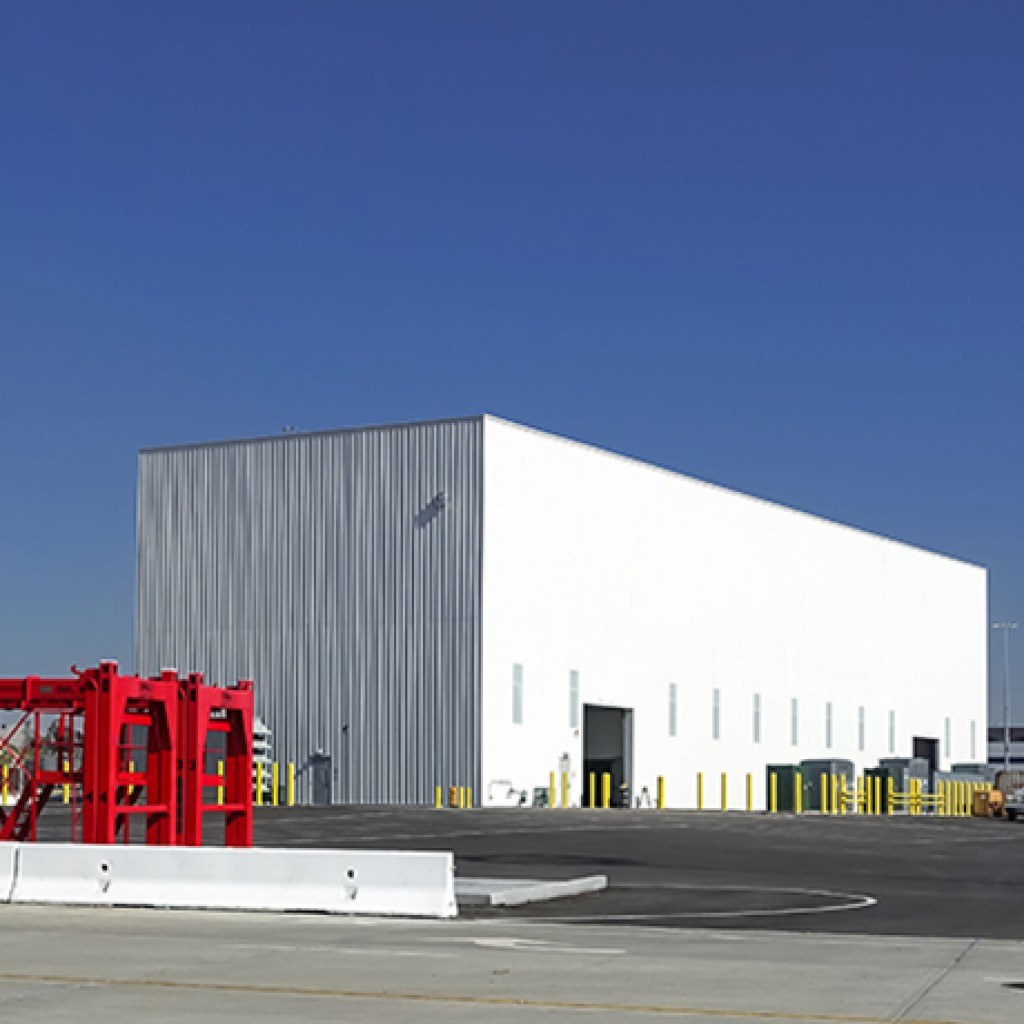
The terminal also features two Battery Exchange Buildings — the first of their kind in the Western Hemisphere — that utilize the tenant’s Battery Exchange System to provide automated battery charging and exchanges of Automated Guided Vehicle batteries. This project received the 2022 American Council of Engineering Companies of California (ACEC CA)’s Engineering Excellence Awards, Grand Award.
Recently, P2S completed the design for charging infrastructure to replace the terminal’s last diesel-powered cargo handling equipment with battery-electric alternatives. The expansion, delivered in an accelerated timeline to meet grant timelines, will provide more than 100 DC fast chargers for utility tractor rigs (UTRs), forklifts, and support equipment. Continuing with the terminal’s role as a technological leader, the design includes automated charger coupling for the UTRs to support fast, efficient, and safe charging between shifts.
Medium-Voltage
Infrastructure Design
P2S provides comprehensive medium‑voltage power system design for ports, marine terminals, and complex infrastructure facilities. Our services include system planning, load forecasting, and detailed design of medium‑voltage distribution systems ranging from 2.4 kV through 35 kV. P2S designs and specifies medium‑voltage switchgear, substations, and distribution architectures that prioritize safety, reliability, maintainability, and future expandability in demanding marine and industrial environments.
Our work includes switchgear layout and specification, protection and coordination studies, protective relaying schemes, and underground distribution systems consisting of duct banks, manholes, and terminations. P2S performs required power system analyses—such as short‑circuit, load flow, arc flash, and coordination studies—to confirm system performance and support safe operations. Across all phases, our team coordinates closely with utilities, owners, and contractors to deliver practical, constructible medium‑voltage systems that support electrification, heavy‑duty equipment, and long‑term operational growth. In addition to the below project, all of our projects, found under the preceding Shore Power and Marine Terminal Design and Electrification showcases, involved medium-voltage infrastructure design.
Port of Long Beach, Pier G Berth G234 Wharf and Backlands
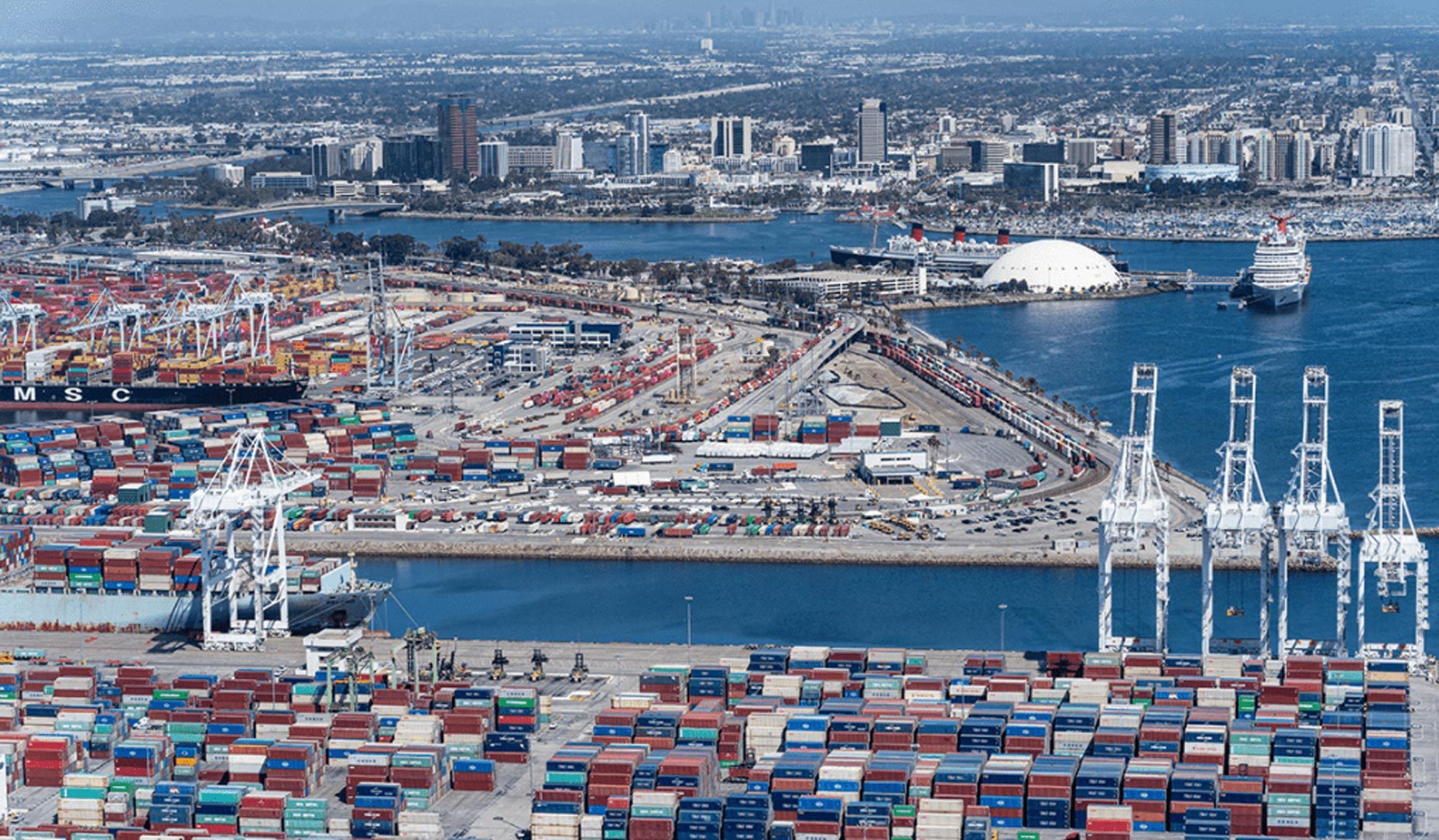
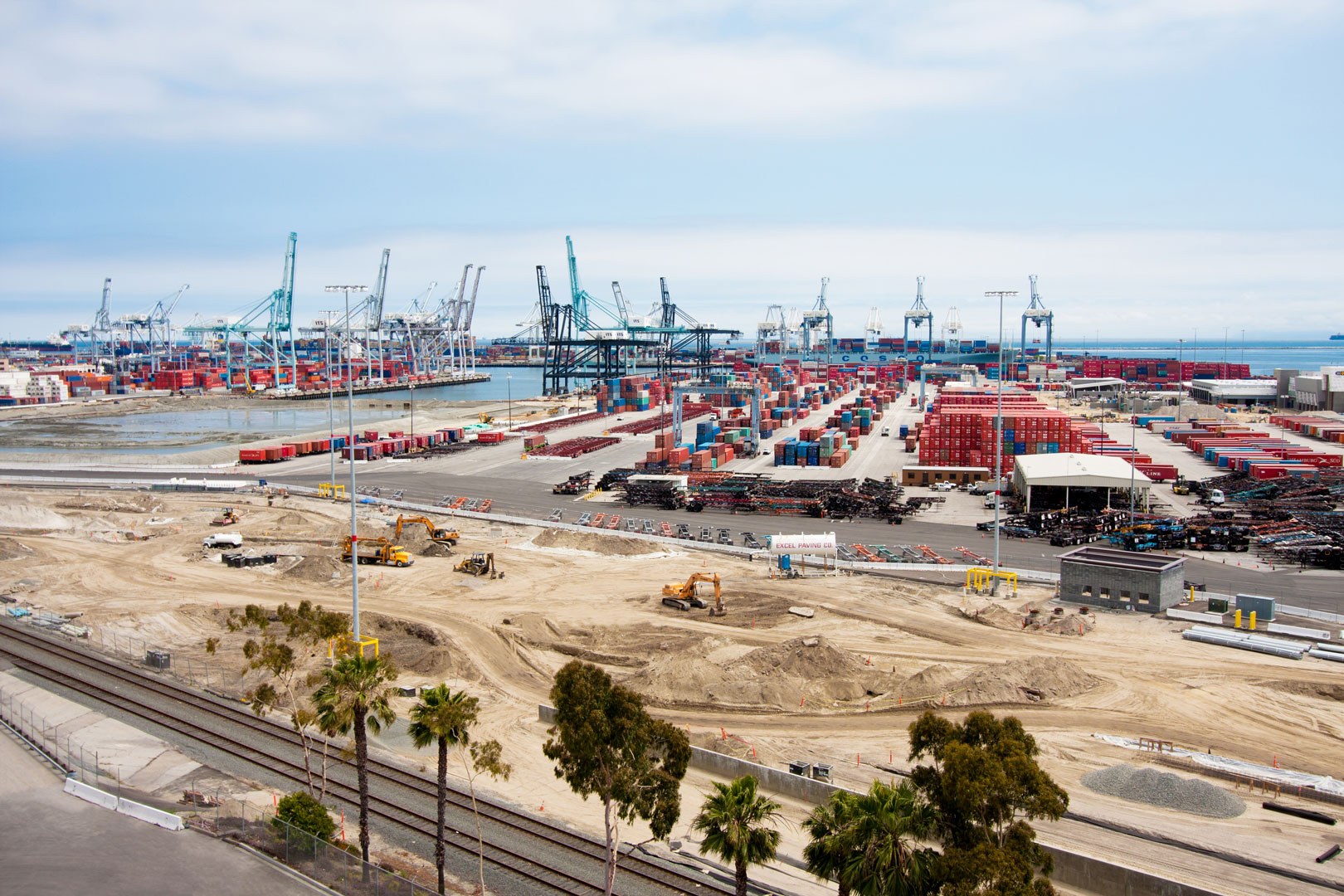
The International Transportation Service (ITS) plans to fill the existing slip between Berths G232 and G236 at Pier G at the Port of Long Beach. The development will be a phased approach, where the slip fill, wharf, and immediate backlands are constructed in Phase 1, and the container yard is constructed in Phase 2.
The P2S team is providing electrical engineering services for the crane power, shore power, high mast lighting, and PTW outlets at new Berth G234 associated with Phase 1 of the build-out. Our scope consists of providing electrical area plans and single line diagrams, including but not limited to the existing SCE equipment, new breakers, high mast lighting, load calculations, and existing crane power and shore power medium-voltage switchgear, transformer, neutral grounding resistor, and its downstream loads.
Our team also prepared electrical demolition plans, feeder and manhole schedules, power system analysis calculations, and a Basis of Design narrative. We supported the permitting process to achieve the necessary Harbor Development Permit and Plan Check approvals and are currently providing construction support services.
Zero-Emissions
Master Planning
P2S provides strategic zero‑emissions (ZE) master planning services to help ports, terminal operators, and maritime stakeholders transition from diesel‑powered operations to electrified and low‑carbon systems. Our approach integrates field investigations, operational assessments, load forecasting, and infrastructure planning to develop practical, phased ZE roadmaps tailored to each facility’s operational needs, regulatory drivers, and funding considerations. P2S evaluates electrification technologies for cargo‑handling equipment, vehicles, vessels, and supporting facilities, while considering grid capacity, utility coordination, technology readiness, and long‑term scalability.
Through ZE master planning efforts, P2S delivers actionable implementation strategies that align near‑term investments with long‑range decarbonization goals and provides our clients with the financial and schedule clarity needed for their capital planning efforts. Our services include ZE load modeling, development of “most‑likely” transition scenarios, preliminary infrastructure concepts, and Rough Order of Magnitude (ROM) cost estimates to support decision‑making and grant readiness. The projects below demonstrate P2S’s experience supporting terminal‑level ZE implementation, multi‑terminal decarbonization strategies, and port‑wide electrification planning efforts across diverse maritime operating environments.
Port of Long Beach, Pier J Zero Emissions Infrastructure Master Plan
P2S was the lead consultant for a multi-disciplinary team developing the Pier J Zero-Emission Infrastructure Master Plan (ZEIMP) at the Port of Long Beach. The project involved a comprehensive technical and financial analysis of the alternatives to transition the terminal to zero-emission, including battery electric and hydrogen options.
The P2S team assessed alternatives for all cargo handling equipment, including rubber-tired gantry cranes (RTGs), utility tractor rigs (UTRs), top handlers, and heavy-duty forklifts. The result is a trailblazing, comprehensive roadmap to move this major container terminal to zero-emission cargo operations by 2030. The comprehensive ZEIMP will ensure strategic deployment of infrastructure that will minimize cost and support the Port’s energy management goals.
SSA Marine, Decarbonization Strategy
P2S played a key role in SSA Marine’s decarbonization strategy, guiding the largest marine terminal operator on the West Coast from diesel-fueled to zero-emission (ZE) technologies. This large-scale project involved over 20 terminals across SSA’s West Coast facilities, including conventional, container/RoRo, and drayage terminals, and is crucial for meeting regulatory demands and positioning SSA for future grants. For each facility, we prepared preliminary ZE master plans, involving conducting comprehensive field investigations, assessments, and agency coordination. For ZE emission load forecasting, our team analyzed proposed ZE equipment at each facility and provided preliminary calculations on additional loads, demands, and flows.
After meeting with each facility’s site staff to discuss current operations and planned improvements, P2S developed battery-electric and hydrogen ZE transition scenarios for each facility and prepared a Rough Order of Magnitude (ROM) cost estimate for recommendations by terminal. Our work has equipped SSA with a clear, actionable roadmap for ZE implementation and positioned its facilities to remain competitive amid evolving regulatory and operational demands.
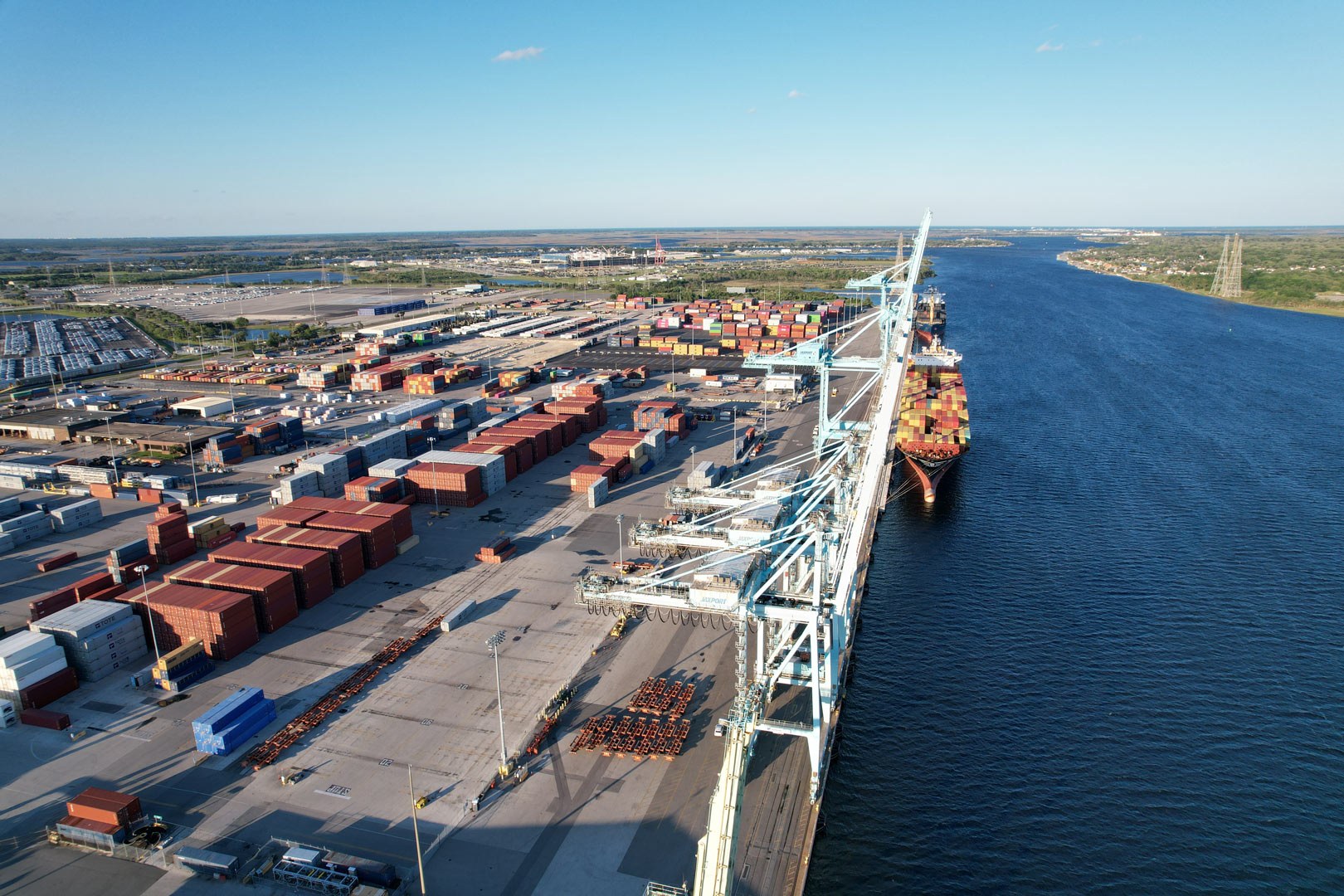
Port of Jacksonville (JAXPORT), Port and Maritime Electrification Plan
The Jacksonville Port Authority (JAXPORT) is executing a three-year electrification planning effort supported by Federal grant funding. P2S is responsible for supporting assessments of the electrical infrastructure and load forecasts under a transition to electric operations. Our work included site visits with each of the JAXPORT operators to document operating conditions, growth plans, and opportunities for electrification. Further, we worked with the local utility, JEA, to document current electrical demand at JAXPORT facilities. Based on our initial investigation, P2S documented the existing conditions, available electrical capacity, and future demand under electrification scenarios. Future work in this ongoing project will include refinement of existing loads and ROM cost estimates for electrification strategies (shore power, crane electrification, battery-electric cargo handling equipment).